Saul Bass, born on May 8, 1920, in New York City, is celebrated as one of the greatest graphic designers of the 20th century. His innovative work in film title sequences and corporate branding has left an enduring legacy, transforming the fields of graphic design and motion graphics.
Early Life and Education
Saul Bass developed an interest in art and design at an early age. He studied at the Art Students League in Manhattan and later attended Brooklyn College, where he was mentored by the influential Hungarian designer György Kepes. This education laid the foundation for Bass’s future career, blending European modernist influences with American commercial design.
Revolutionizing Film Titles
Saul Bass is perhaps best known for his groundbreaking work in film title sequences. Before Bass, title sequences were often straightforward and functional, with little artistic flair. Bass revolutionized this by turning them into an integral part of the cinematic experience, setting the tone and mood for the film to follow. Some of his most famous title sequences include:
- “The Man with the Golden Arm” (1955): Bass’s work on this Otto Preminger film is considered one of the first instances of modern title design. The jagged, animated lines reflected the film’s themes of addiction and struggle, creating a powerful visual metaphor.
- “Vertigo” (1958): For Alfred Hitchcock’s classic, Bass created a mesmerizing sequence using spiraling graphics and an unsettling score by Bernard Herrmann. The sequence perfectly encapsulated the film’s themes of obsession and disorientation.
- “Psycho” (1960): Another collaboration with Hitchcock, the title sequence for “Psycho” used stark, slashing lines to convey a sense of foreboding and tension, setting the stage for one of cinema’s most iconic thrillers.
- “North by Northwest” (1959): Bass’s dynamic and abstract design, combined with Bernard Herrmann’s thrilling score, created a sense of motion and excitement that perfectly complemented Hitchcock’s suspenseful narrative.
Iconic Logo Designs
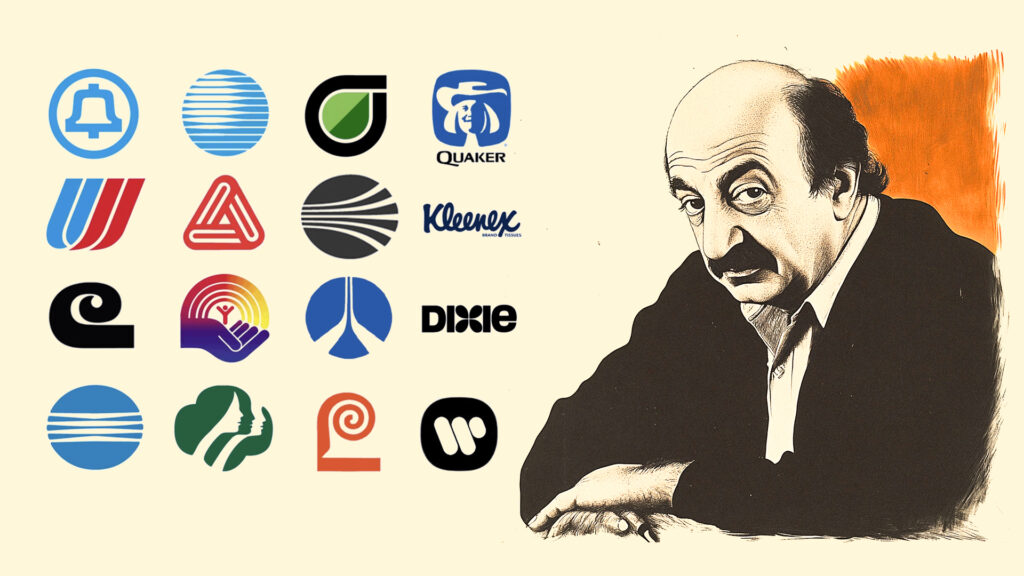
In addition to his work in film, Saul Bass made significant contributions to corporate branding. His logo designs are known for their simplicity, elegance, and timeless appeal. Some of his most recognizable logos include:
- AT&T (1969): Bass designed the iconic bell logo for AT&T, which symbolized communication and connectivity. In 1983, he modernized the logo with a globe design to represent the company’s global reach.
- United Airlines (1974): The “tulip” logo for United Airlines, featuring a stylized “U” in red and blue, became a symbol of the airline’s brand identity for decades.
- Quaker Oats (1969): Bass redesigned the Quaker Oats logo, giving it a modern, streamlined look that maintained the brand’s traditional values.
- Warner Bros. (1972): Bass revamped the Warner Bros. logo, creating a minimalist, shield-like design that conveyed strength and stability.
Design Philosophy
Saul Bass’s design philosophy centered on clarity, simplicity, and the power of visual storytelling. He believed that design should communicate the essence of a subject in a clear and compelling way. His minimalist approach focused on stripping away unnecessary elements, leaving only the most essential and impactful components.
Bass once said, “Design is thinking made visual.” This statement encapsulates his belief that design is not just about aesthetics, but about conveying ideas and emotions effectively. Whether through a film title sequence or a corporate logo, Bass’s work always told a story and connected with the audience on a deeper level.
Legacy and Influence
Saul Bass’s influence on the fields of graphic design and motion graphics is profound and lasting. His innovative approach to film titles paved the way for future designers and filmmakers, showing that the opening sequence could be an art form in itself. His corporate logos remain timeless examples of effective branding, demonstrating the power of simplicity and clarity.
Bass’s work continues to inspire designers around the world. His ability to distill complex ideas into simple, elegant designs has set a standard that many strive to achieve. In recognition of his contributions, Bass received numerous awards and honors throughout his career, cementing his place as a true master of design.